
Best Pipelines in CFB 26: Every Recruiting Region Ranked for Dynasty
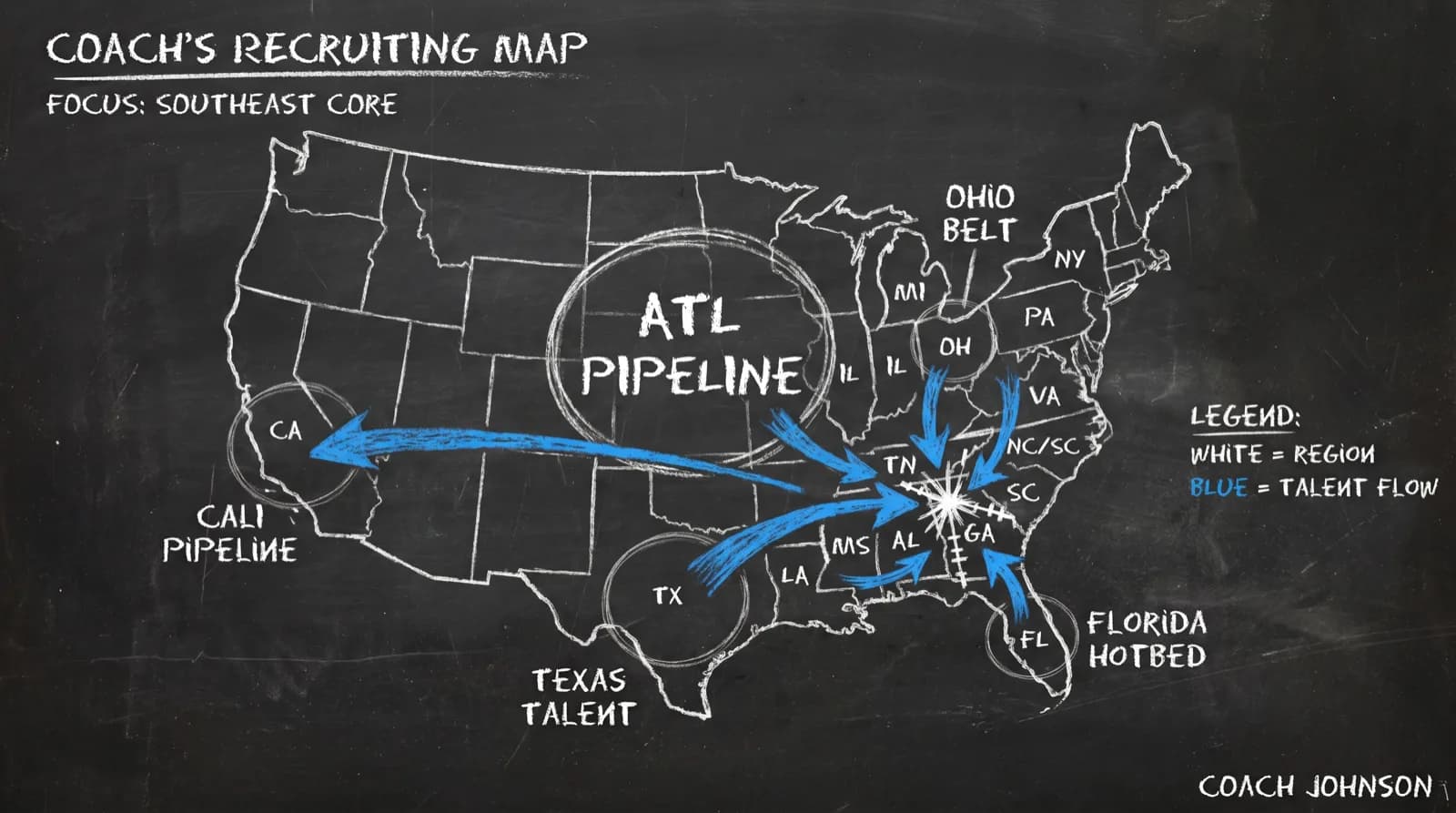
If you want to own the recruiting trail in CFB 26, stop looking at star ratings and start looking at geography. Metro Atlanta accounts for roughly 9% of all 5-star recruits in the game — that's around 29 five-stars across a full 10-class aggregate, about 3 per recruiting cycle. If your board is built on gut feel, you're losing recruits to schools that know exactly which pipelines to work.
This is the playbook for maximizing your roster.
How the pipeline system actually works
Forget the random message board takes. The pipeline system is a three-layer stack, and understanding each layer is the difference between a top-10 class and a complete bust.
The 5-tier system (what the colors mean)
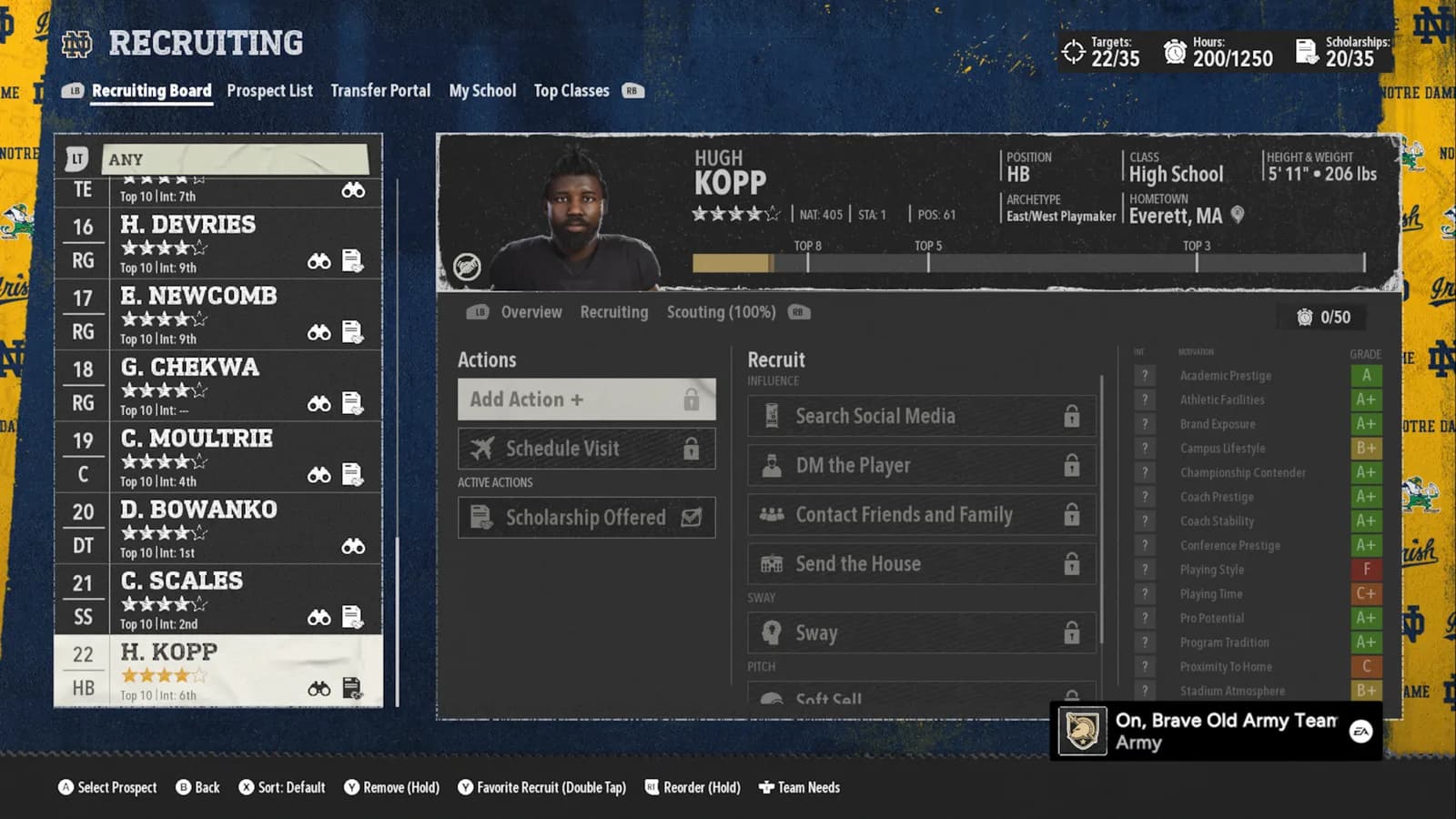
Pipelines run from Tier 1 to Tier 5. You'll see these as color-coded icons on recruit profiles and your recruiting screen. The game doesn't label the hierarchy in the UI — you're expected to know it.
- Tier 5 (Pink/Purple): the strongest pull.
- Tier 4 (Blue): strong pull.
- Tier 3 (Gold): moderate pull.
- Tier 2 (Silver): weak pull.
- Tier 1 (Bronze): minimal pull.
These tiers represent your program's historical reach in a specific geographic zone. They're static at dynasty start. School pipelines are baked into each program and won't expand or contract on their own between seasons.
Three pipeline layers, not one
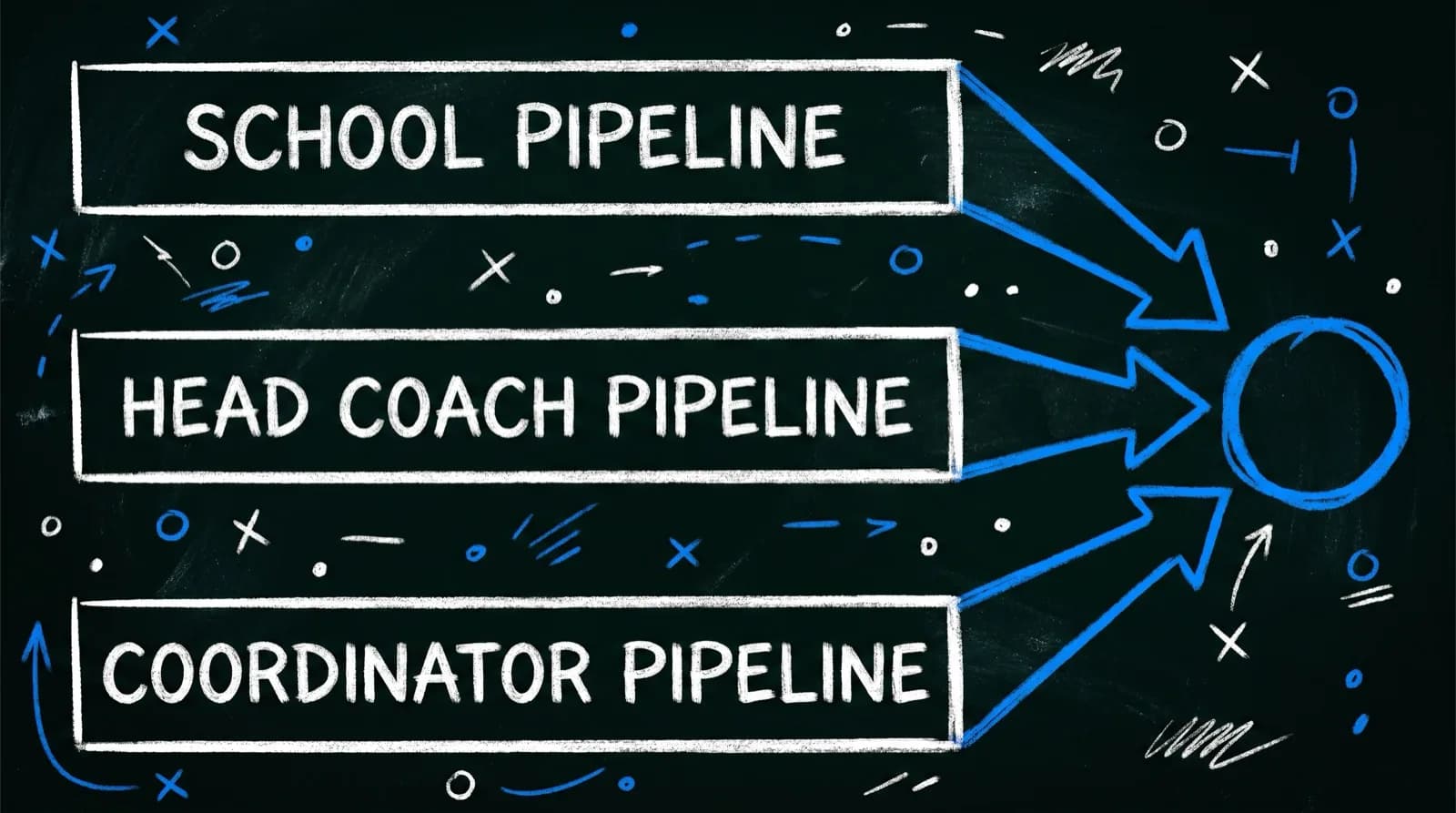
This is where most players go wrong. You're not dealing with a single pipeline score — you're stacking three overlapping systems:
- School pipeline tiers. Baked into every program at day one. Static.
- Head coach pipeline. Selected at dynasty creation. Permanent. Gives a weekly starting interest boost for recruits from that region. The boost is real but invisible — no label shows up on the recruit screen.
- Coordinator pipelines. Each OC and DC has their own pipeline region, which stacks on top of the school and HC tiers. Community data supports this stacking behavior, though it hasn't been independently tested as rigorously as the school/HC layers — treat it as highly plausible rather than mechanically proven.
To build a recruiting fortress, stack all three on the same region. Georgia with a Tier 5 base in Metro Atlanta, your HC set to Metro Atlanta, and your DC with an Atlanta pipeline is about as close to easy mode as the game allows. You can also run your HC and coordinator pipelines into a region where your school has no native presence.
What pipelines actually affect (and what they don't)
Most players assume pipelines increase the influence gain from recruiting actions. Community data says otherwise.
Confirmed effects:
- Starting interest. Recruits from pipeline regions start with higher interest in your school. This is the biggest real advantage — high starting interest means instant commitments on scholarship offers and saves recruiting hours you'd otherwise burn on the pitch.
- Hard Sell progress. Pipeline recruits earn extra progress during Hard Sell pitches. The exact magnitude isn't quantified, but the effect is real.
- Visit costs. Geographic proximity cuts visit costs. Visits run between 10 and 40 recruiting hours depending on distance; pipeline alignment pushes that toward the low end.
- Proximity to Home grade. Your school's grade here tracks pipeline geography, which makes it easier to lock down elite local recruits who value staying close.
What pipelines don't affect:
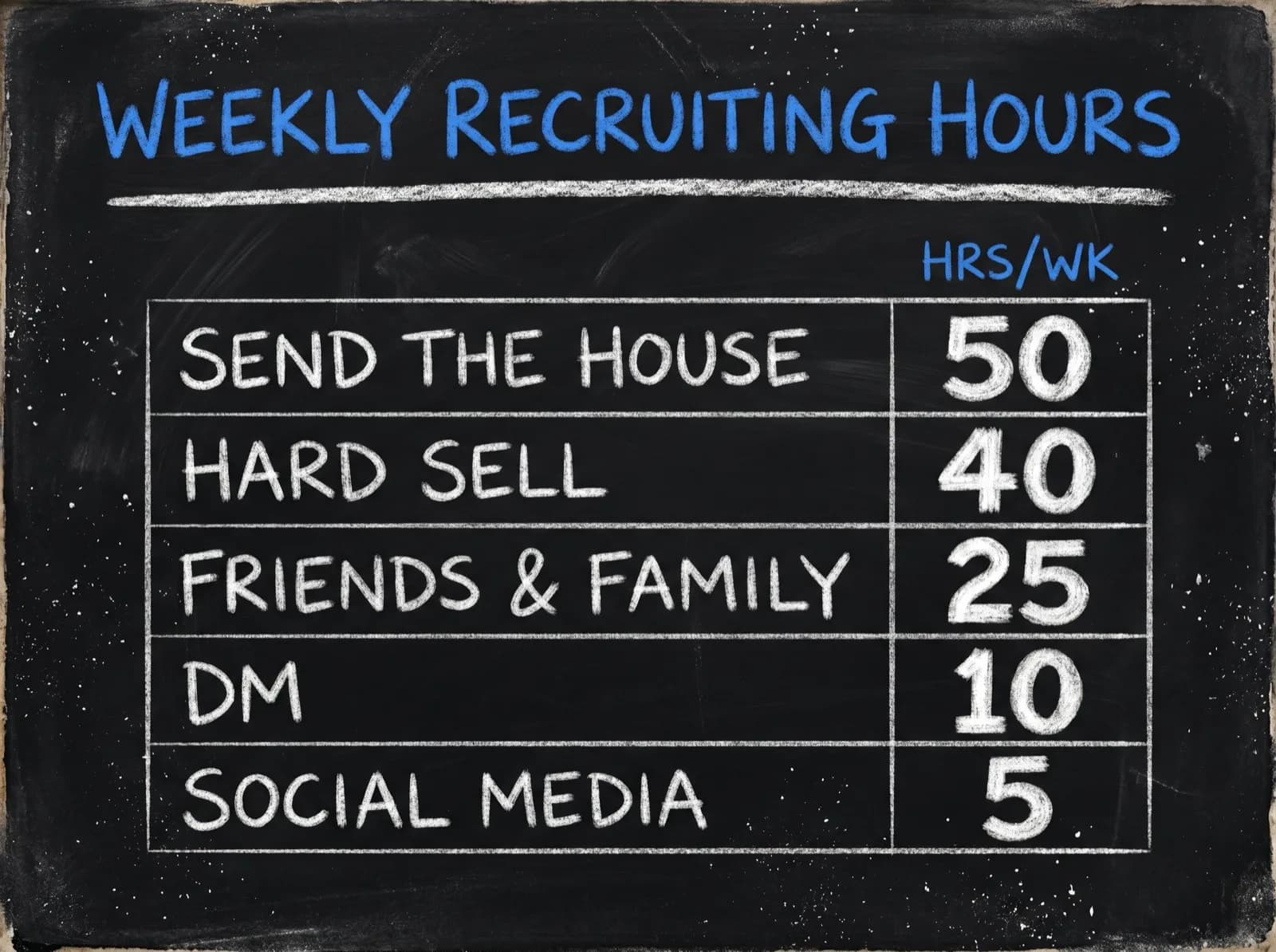
A controlled test run by CollegeFootball.gg in College Football 25 found that pipeline tier has no measurable impact on influence gained from Send the House (50 hours), Hard Sell (40 hours), Friends and Family (25 hours), DM (10 hours), or Social Media (5 hours). A Tier 3 school and a Tier 5 school gain influence from standard weekly actions at the same rate. The test was run on CFB 25, but the mechanic almost certainly carries into CFB 26.
Note: the study did not test Hard Sell or Soft Sell interactions specifically. If you've been picking pipelines thinking your Send the House hits harder, that's not what's happening.
CFB 26 pipeline tier list — every region ranked
Ranked by 5-star density. Total pipeline region count is debated (somewhere between 42 and 50 distinct regions); we call them out individually where the data is solid.
S-tier pipelines (highest 5-star density)
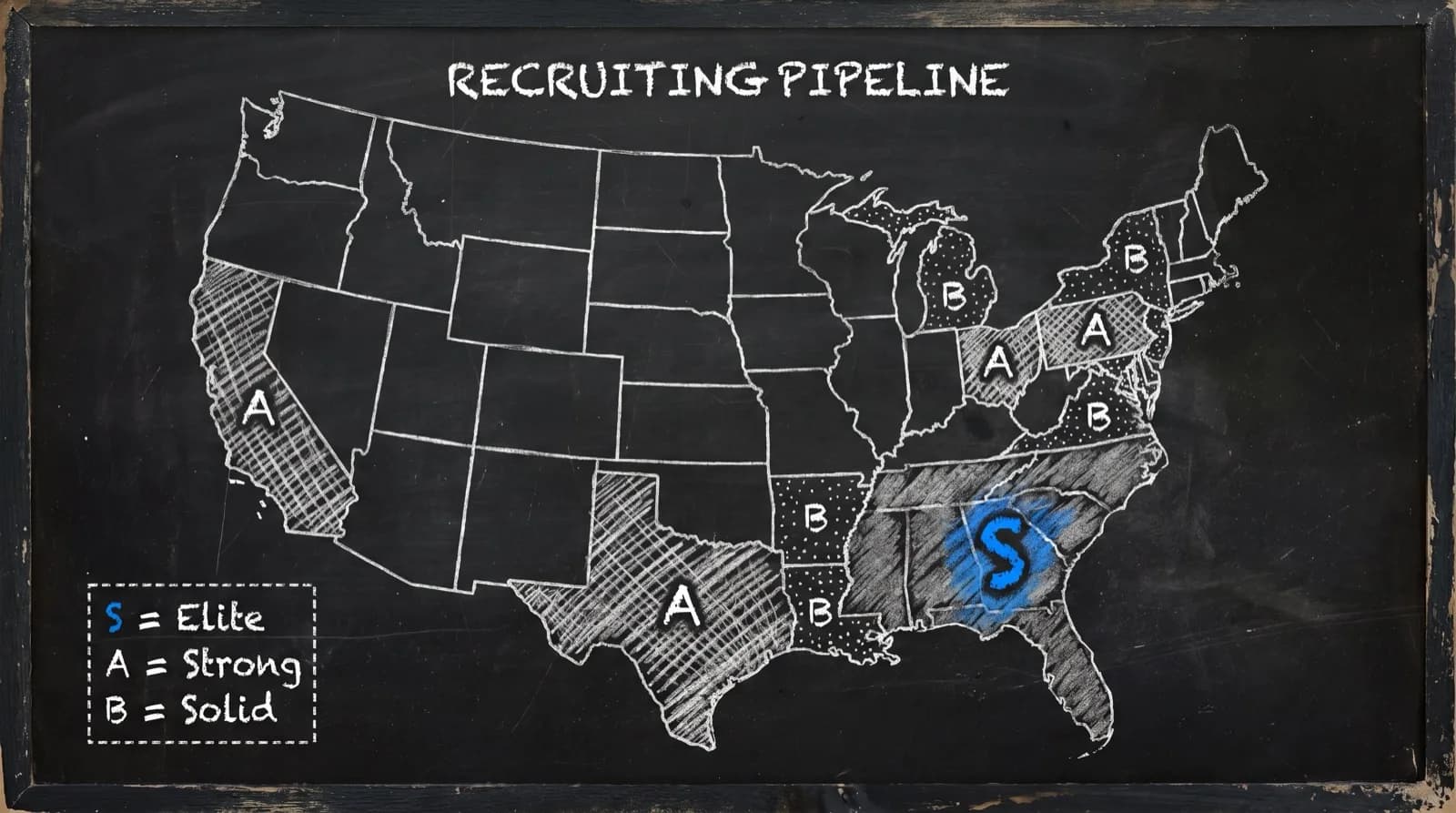
These regions should drive your coach pipeline choice and board strategy.
| Region | 5-star potential | Notes | Standout Tier 5 teams |
|---|---|---|---|
| Metro Atlanta | ~9% of total pool | The top pipeline. ~29 five-stars across a 10-class aggregate (about 3 per cycle). Tier 5 access here is the closest thing to easy mode. | Clemson, Georgia |
| South Florida | Elite | Heavy lean toward speed skill positions (WR/RB/DB). | Alabama, Florida, Georgia, Miami |
| East Texas | High volume | Strong pipeline for WRs and trench players. | Baylor, TCU, Texas, Texas A&M |
| North Texas | Depth | Solid across all positions, particularly offensive line. | Alabama, Oklahoma, Texas, Texas A&M |
| Southwest Texas | Raw capacity | High volume of talent across positions. | No team holds Tier 5 here |
| Southern California | Elite | Top pipeline for QBs and marquee skill positions. | Arizona State, Oregon, UCLA, USC |
Programs with Tier 5 access here typically sit at the top of the preseason rankings. If you're starting a new dynasty, cross-reference your school's pipeline with this list. A mismatch means you're climbing uphill from day one.
A-tier pipelines (strong, worth building around)
- Northern California: Strong QB and tight end depth. Standout Tier 5 teams: California holds Tier 4 here; no team reaches Tier 5.
- Louisiana: Community data points to strong production for linemen and explosive skill players. Standout Tier 5 team: LSU.
- South Georgia: High concentration of defensive prospects. Standout Tier 5 teams: Auburn, Georgia.
- Tidewater: Known for secondary recruits and WRs. Standout Tier 5 teams: Alabama, Clemson, Maryland, North Carolina, Penn State.
- Central Florida: Deep and competitive. Standout Tier 5 teams: Alabama, Clemson, Florida, Florida State, Georgia, Miami.
B-tier pipelines (serviceable)
These regions produce quality depth but lack the top-end 5-star concentration of the S-tier. Only target them as your primary coach pipeline if you're building an identity around local recruiting. Good for 3- and 4-star depth, not for chasing elite classes.
The worst pipelines (challenge run territory)
If you want hard mode, recruit from these regions:
- Big Sky
- Hawaii
- New England
- Kansas
- Wisconsin
- Big Apple
The talent pool is smaller and star ratings are lower. A solid handicap run, a trap for standard rebuilds.
Picking your coach pipeline — the decision you can't undo
You get one shot at your coach pipeline at dynasty creation. There's no in-game editor to change it later. Pick a niche regional pipeline, hop schools, and that choice follows your coach forever.
How to pick the right coach pipeline
School alignment is the first question. If your school has a Tier 4 or 5 pipeline in an elite region, set your coach pipeline to match it. Stacking is how you get the most out of starting interest.
If you're starting at a program with weak pipelines, your coach pipeline is the only lever for generating starting interest in a top-tier region. A Tier 1 coach pipeline won't fully close the gap against a native Tier 5 powerhouse, but it beats nothing.
The journeyman move: if you plan to hop schools, pick a region that produces talent regardless of where you're coaching. Metro Atlanta, South Florida, and East Texas hold value at any school. A Midwest regional pipeline set from a Big Ten rebuild becomes a dead asset the moment you take an SEC job.
How to upgrade pipelines in CFB 26
Yes, you can upgrade school pipelines. It's not cheap and it's not a year-one project. You need to reach the Program Builder archetype in the Relationship Builder skill tree.
The upgrade skill tree
Each node in the Relationship Builder tree costs 16 coaching points:
- Tier 1 (Invest): Upgrades your school's two best pipelines by one tier.
- Tier 2 (Making Inroads): Upgrades your school's five best pipelines by one tier.
- Tier 3 (Share the Wealth): Upgrades your school's five worst pipelines by one tier.
Tiers 1 and 2 stack additively — both active at once can push a Tier 3 pipeline to Tier 5.
Unlocking Program Builder requires 125 coaching points in any skill tree and at least 5 playoff wins. Some pre-launch sources listed the threshold at 75 points; post-launch community consensus is 125. This is a win-now mechanic for established dynasties.
Known bug: Invest occasionally upgrades only one pipeline instead of two when activated mid-season. Engine issue, not user error.
Strong Roots tree (Program Builder archetype)
The Strong Roots tree gives passive boosts tied to your primary coach pipeline:
- Tier 1 (Giving Back): boost to your primary pipeline.
- Tier 2 (Household): boost to starting interest for primary pipeline recruits.
- Tier 3 (Hometown Discount): extra influence for primary pipeline recruits.
"Primary pipeline" in this tree means your chosen coach pipeline specifically, not the school's highest-tier region. Clarify that distinction before spending points.
Pipeline strategy — how to actually use this
Recruiting is resource allocation. Stop chasing everyone. What follows is the pipeline-specific logic.
The recruiting board filter
Pull up your board and filter by interest. For any recruit in your top 8, check their pipeline tier:
- Tier 4 or 5: priority target.
- Tier 1 or 2 (at a smaller school): probably a trap.
You have 350 recruiting hours per cycle. Spending 50 of them chasing a 4-star in a region where Ohio State holds Tier 5 and you hold Tier 1 isn't a brave stand — you're draining your future depth chart. Cut those recruits early and move the hours somewhere winnable.
Powerhouse vs. rebuild
At a powerhouse like Clemson, school pipelines do the heavy lifting. Set your coach pipeline to supercharge your strongest region, then use Program Builder to push Tier 4s to Tier 5. You're winning on starting interest before you send a single pitch.
At a rebuild, pick one region with your coach pipeline and commit to it. That coach pipeline, combined with smart scheduling, is your best shot at stealing a 4-star from a juggernaut.
When out-of-pipeline recruiting makes sense
Break your own rule for two reasons:
- A generational 5-star who fills a real positional gap.
- A late-cycle recruit with zero other schools chasing them.
Outside your pipeline, visit costs go up, Hard Sells are less efficient, and starting interest is lower. That's a math problem you shouldn't take on unless you have to.
CFB 27 pipeline changes — what's coming this summer
CFB 27 is scheduled for July 9, 2026. The only confirmed pipeline change so far: Proximity to Home moves to real coordinate distance (latitude/longitude) between the recruit's town and each school campus. That decouples visit costs and proximity grades from pipeline tier assignments entirely.
Everything else below is pre-launch and unconfirmed — verify after July 9, 2026.
Pipelines still matter. EA has indicated pipelines remain a core recruiting pillar. Unconfirmed pre-launch.
NIL. NIL already exists in CFB 26 via Brand Exposure dealbreakers on glamour positions (QB, WR). CFB 27 is expected to surface it more explicitly; exact changes are unconfirmed.
Community wishlist. Players have widely asked for dynamic school pipelines that grow or shrink based on roster composition and recruiting results. EA has not confirmed this for CFB 27.
Frequently Asked Questions
What is the best pipeline in CFB 26?
Metro Atlanta is the top pipeline in CFB 26, accounting for roughly 9% of all 5-star recruits in the game — about 29 five-stars across a 10-class aggregate, or around 3 per cycle. South Florida, East Texas, North Texas, Southwest Texas, and Southern California round out the S-tier.
What are the worst pipelines in CFB 26?
Big Sky, Hawaii, New England, Kansas, Wisconsin, and Big Apple. The talent pool is smaller and star ratings are lower. Good for a challenge run, a trap for a standard rebuild.
What's the difference between my school's pipeline and my coach's pipeline in CFB 26?
Two separate systems. Your school's pipeline tiers are fixed to geographic regions and represent the program's historical reach; they don't change unless you upgrade them through Program Builder. Your coach's pipeline is selected at creation, is permanent, and gives a weekly starting interest boost for recruits from that region. The boost shows no label in the UI. You can't change your coach pipeline after creation.
Can you upgrade pipelines in CFB 26?
Yes. School pipelines can be upgraded through the Relationship Builder skill tree under the Program Builder archetype. Tier 1 (Invest) upgrades your two best pipelines by one tier; Tier 2 (Making Inroads) upgrades your five best; Tier 3 (Share the Wealth) upgrades your five worst. Tiers 1 and 2 stack: both active can push a Tier 3 pipeline to Tier 5. Unlocking Program Builder requires 125 coaching points in any tree and at least 5 playoff wins.
Do pipelines affect weekly recruiting influence in CFB 26?
No, not for standard actions. CollegeFootball.gg ran a controlled test in College Football 25 showing pipeline tiers have no measurable effect on weekly influence from Send the House, Friends and Family, DM, or Social Media. Where pipelines show up: starting interest (higher baseline), visit cost reductions, and Hard Sell progress. Action costs are the same regardless of tier — Send the House costs 50 hours, Hard Sell 40, Friends and Family 25, DM 10, Social Media 5.
What positions does each pipeline produce?
Real-world geography inspires position tendencies in CFB 26, but per-pipeline position skews haven't been independently verified with in-game data. Louisiana is commonly cited for linemen and explosive skill players; South Florida for speed skill positions (WRs, DBs). Use these as community heuristics, not guarantees.
Does pipeline choice matter for a journeyman coaching career?
Yes. If you plan to hop schools, pick a region that produces talent everywhere you're likely to land. Metro Atlanta, South Florida, and East Texas hold value at any school. A regional pipeline tied to one conference area becomes nearly useless two jobs down the road.
What's changing with pipelines in CFB 27?
How "Proximity to Home" is calculated changes completely. CFB 27 uses actual coordinate distance between the recruit's town and each school campus instead of pipeline-region approximations. Visit costs and proximity grades decouple from pipeline tier assignments. Everything else about CFB 27 is unconfirmed pre-launch — verify after July 9, 2026.