
Best Pipelines in CFB 27: Every Recruiting Region Ranked (Pre-Launch)
If you want to own the recruiting trail in CFB 27, the play is the same as CFB 26: stop looking at star ratings and start looking at geography. Metro Atlanta accounts for roughly 9% of all 5-star recruits — around 29 five-stars across a full 10-class aggregate, about 3 per cycle. The regions that dominated CFB 26 recruiting are expected to dominate CFB 27 too.
One important caveat up front: EA has confirmed the pipeline system carries over, but has not published CFB 27 region names or tier assignments. The ranking below uses CFB 26's launch dataset as the best available proxy. We'll verify and update every figure on July 9, when the game releases.
What is genuinely new in CFB 27 — and changes how you use these pipelines — is the Proximity to Home split. Proximity is now calculated from real latitude and longitude, decoupled from pipeline tiers. That doesn't change which regions are best, but it changes which schools get the most out of them. This guide ranks the regions, then explains the proximity wrinkle.
How the CFB 27 pipeline system works
EA's June 4 Dynasty Deep Dive confirmed pipelines still matter in CFB 27 — they're listed alongside coaching archetype, scheme, and alma mater as factors that "continue to matter" when a school builds its candidate list. The three-layer structure from CFB 26 is assumed to carry over.
The 5-tier system (expected carryover)
Pipelines run from Tier 1 to Tier 5, shown as color-coded icons on recruit profiles. The game doesn't label the hierarchy in the UI — you're expected to know it. EA has not confirmed the tier structure changed, so we assume it carries over from CFB 26 unchanged:
- Tier 5 (Pink/Purple): the strongest pull.
- Tier 4 (Blue): strong pull.
- Tier 3 (Gold): moderate pull.
- Tier 2 (Silver): weak pull.
- Tier 1 (Bronze): minimal pull.
These tiers represent a program's historical reach in a specific geographic zone. They're static at dynasty start. School pipelines are baked into each program and won't expand or contract on their own between seasons — this is a CFB 26 mechanic assumed carried over, not yet confirmed for CFB 27.
Three pipeline layers, not one
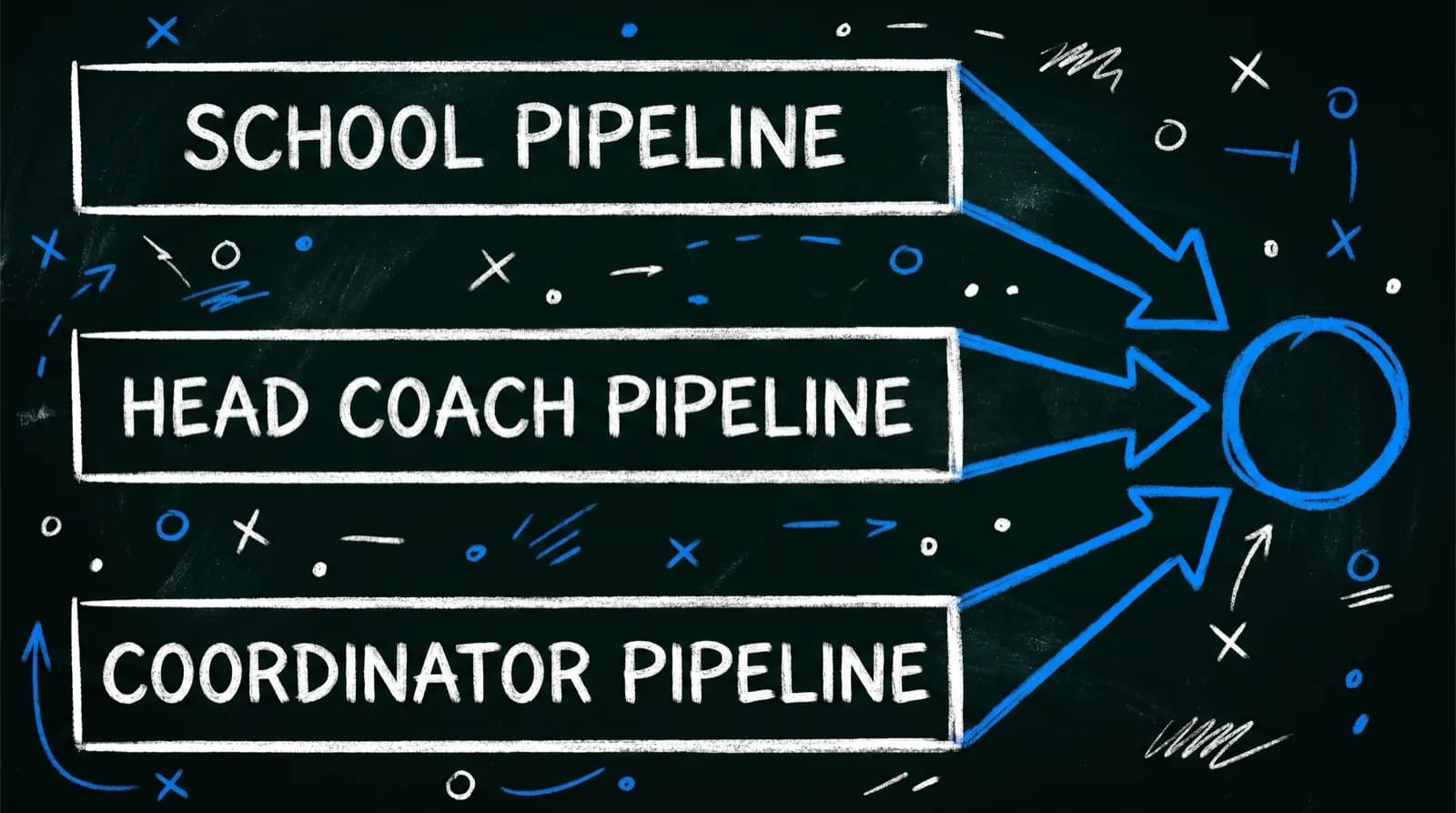
You're not dealing with a single pipeline score — you're stacking three overlapping systems (carried over from CFB 26):
- School pipeline tiers. Baked into every program at day one. Static.
- Head coach pipeline. Selected at dynasty creation. Permanent. Gives a weekly starting interest boost for recruits from that region. The boost is real but invisible — no label shows up on the recruit screen.
- Coordinator pipelines. Each OC and DC has their own pipeline region, which stacks on top of the school and HC tiers.
To build a recruiting fortress, stack all three on the same region. Georgia with a Tier 5 base in Metro Atlanta, your HC set to Metro Atlanta, and your DC with an Atlanta pipeline is about as close to easy mode as the game allows. The stacking behavior is community-documented from CFB 26; assume it carries into CFB 27 until proven otherwise.
What's genuinely new: the Proximity to Home split
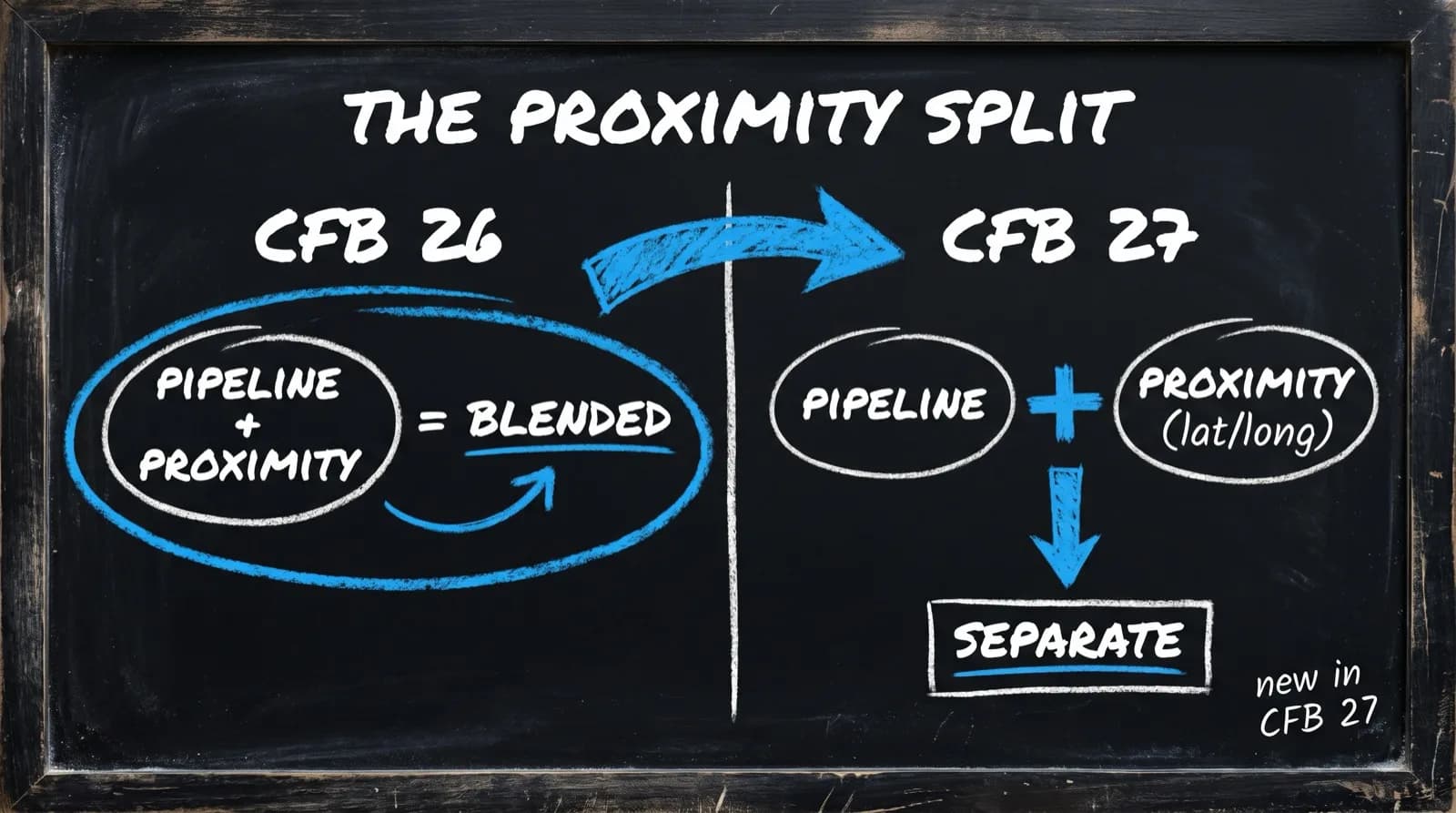
This is the one confirmed change that affects how you use pipelines. In CFB 26, Proximity to Home was a pipeline-based approximation — your pipeline footprint stood in for how close a recruit lived. In CFB 27, EA confirmed Proximity to Home is now calculated from real latitude and longitude per city, producing a precise distance between a recruit's home and each school.
The two signals are now separate. A school physically close to a recruit earns a strong Proximity grade even with a low pipeline tier in that region — and vice versa. Pipelines no longer do double duty as a geographic proxy.
This doesn't change which pipeline regions are best (tier strength is independent of the proximity change), but it does change which schools extract the most value from a given region. A mid-major sitting geographically close to a talent-dense metro may now grade stronger on Proximity than its pipeline tier ever implied in CFB 26.
For the full breakdown of the proximity mechanic, the verbal commit multiplier, and what carried over vs. changed, see our CFB 27 Pipeline Changes guide.
The best pipeline regions in CFB 27 (expected, pre-launch)
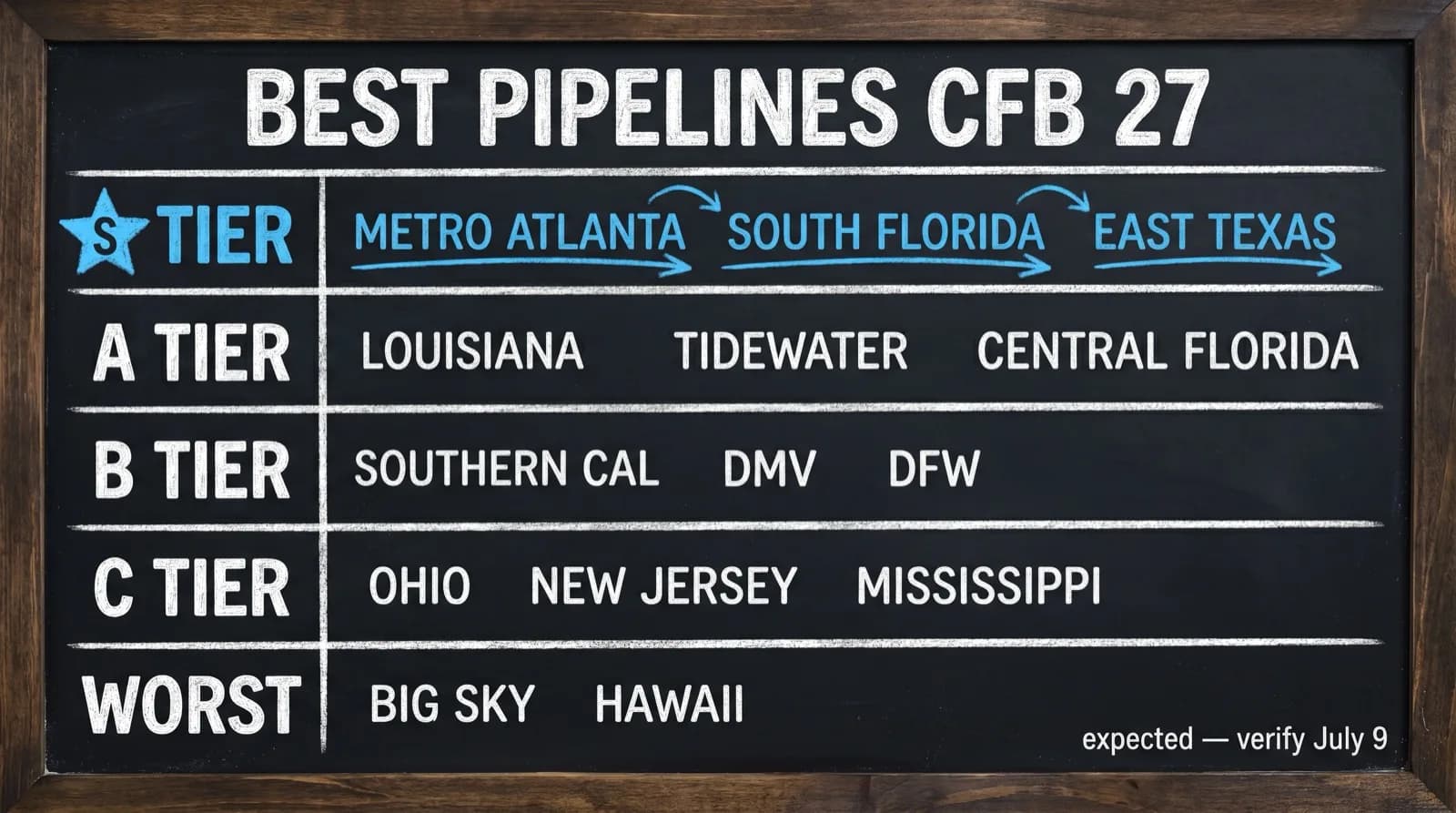
Ranked by 5-star density and tier-5 access. Because EA has not published CFB 27 pipeline data, this ranking uses CFB 26's launch dataset as the best available proxy — the regional talent distribution in college football doesn't shift year to year, and EA confirmed the pipeline system carries over. Treat every figure as expected, not confirmed. We verify on July 9.
S-tier pipelines (highest 5-star density)
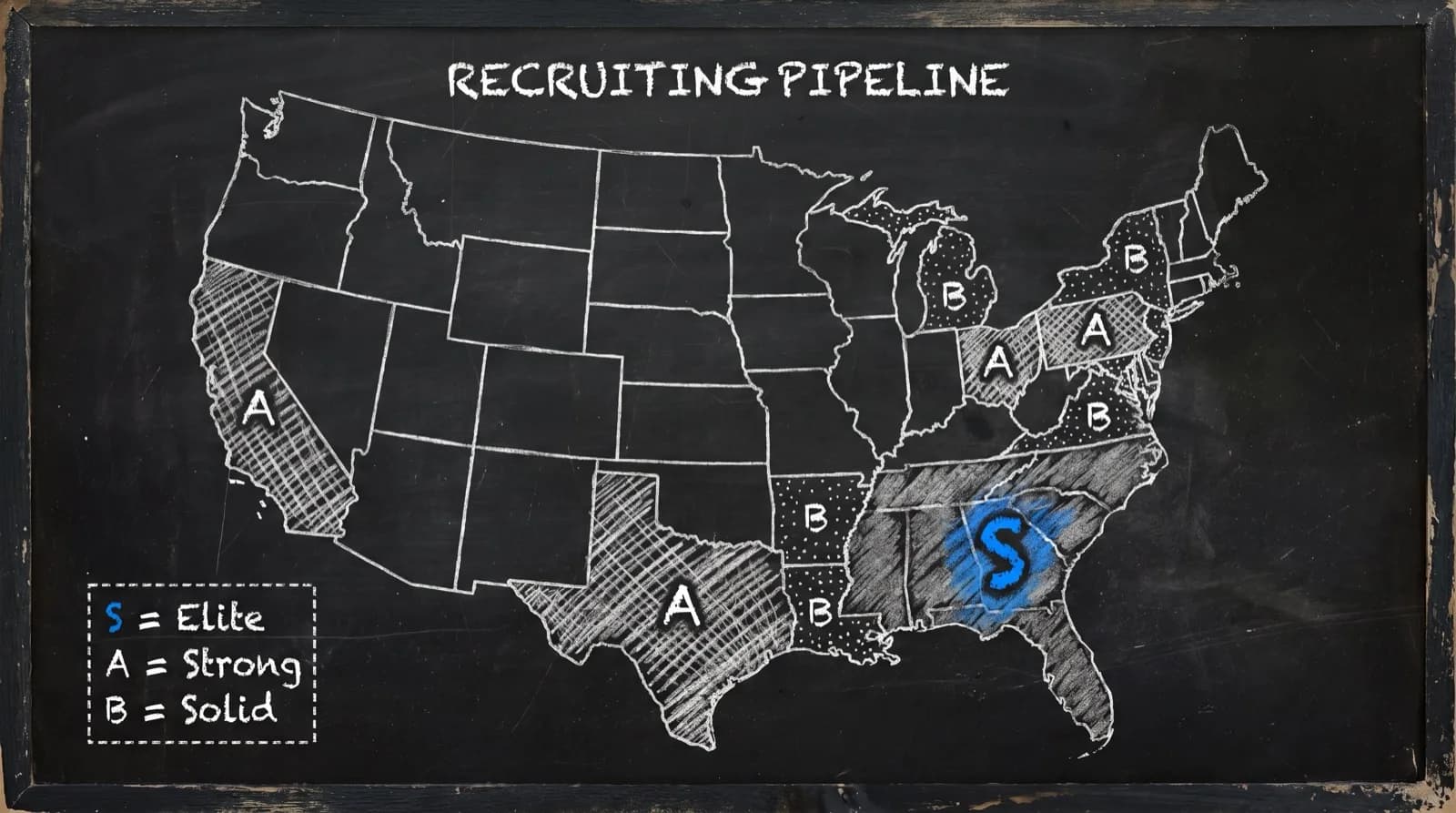
These regions should drive your coach pipeline choice and board strategy. Tier-5 standout teams listed are from CFB 26 data — expected to hold in CFB 27, unconfirmed.
| Region | 5-star potential | Notes | Standout Tier 5 teams (CFB 26 data) |
|---|---|---|---|
| Metro Atlanta | ~9% of total pool | The top pipeline. ~29 five-stars across a 10-class aggregate (about 3 per cycle). Tier 5 access here is the closest thing to easy mode. | Clemson, Georgia |
| South Florida | Elite | Heavy lean toward speed skill positions (WR/RB/DB). | Alabama, Florida, Georgia, Miami |
| East Texas | High volume | Strong pipeline for WRs and trench players. | Baylor, TCU, Texas, Texas A&M |
| North Texas | Depth | Solid across all positions, particularly offensive line. | Alabama, Oklahoma, Texas, Texas A&M |
| Southwest Texas | Raw capacity | High volume of talent across positions. No team holds Tier 5 or Tier 4 here in CFB 26 data. | None (no Tier 5 or Tier 4) |
| Southern California | Elite | Top pipeline for QBs and marquee skill positions. | Arizona State, Oregon, UCLA, USC |
Programs with Tier 5 access here typically sit at the top of the preseason rankings. If you're starting a new dynasty, cross-reference your school's pipeline with this list. A mismatch means you're climbing uphill from day one.
A-tier pipelines (strong, worth building around)
- Northern California: Strong QB and tight end depth. No team reaches Tier 5; California holds Tier 4 here (CFB 26 data).
- Louisiana: Community data points to strong production for linemen and explosive skill players. Standout Tier 5 team: LSU.
- South Georgia: High concentration of defensive prospects. Standout Tier 5 teams: Auburn, Georgia.
- Tidewater: Known for secondary recruits and WRs. Standout Tier 5 teams: Alabama, Clemson, Maryland, North Carolina, Penn State.
- Central Florida: Deep and competitive. Standout Tier 5 teams: Alabama, Clemson, Florida, Florida State, Georgia, Miami.
B-tier pipelines (serviceable)
These regions produce quality depth but lack the top-end 5-star concentration of the S-tier. Only target them as your primary coach pipeline if you're building an identity around local recruiting. Good for 3- and 4-star depth, not for chasing elite classes.
The worst pipelines (challenge run territory)
If you want hard mode, recruit from these regions (CFB 26 data, expected to carry over):
- Big Sky
- Hawaii
- New England
- Kansas
- Wisconsin
- Big Apple
The talent pool is smaller and star ratings are lower. A solid handicap run, a trap for standard rebuilds.
How the proximity split changes which regions matter
The regional ranking above doesn't change in CFB 27 — but the value of holding a strong pipeline in a region now depends on where your school sits geographically. This is the genuinely new strategic layer.
Schools near talent-dense metros gain a second advantage
In CFB 26, a school's Proximity to Home grade tracked its pipeline geography — holding a strong pipeline in a region implicitly boosted your proximity score there. In CFB 27, that linkage is gone. Proximity is pure distance now.
The practical effect: a school physically located near a talent-dense metro now earns a strong Proximity grade on its own merits, stacking on top of whatever pipeline tier it holds there. Georgia (in Metro Atlanta's backyard, with Tier 5 access) gets both advantages. A mid-major 30 miles from a metro where it holds only Tier 2 gets proximity credit it never got before.
If you're picking a rebuild in CFB 27, weigh geographic closeness to talent alongside pipeline tier for the first time. The pipeline tier still matters — but a school that wins on both pipeline and proximity is now strictly better than one that wins on pipeline alone.
The verbal commit multiplier rewards all three factors
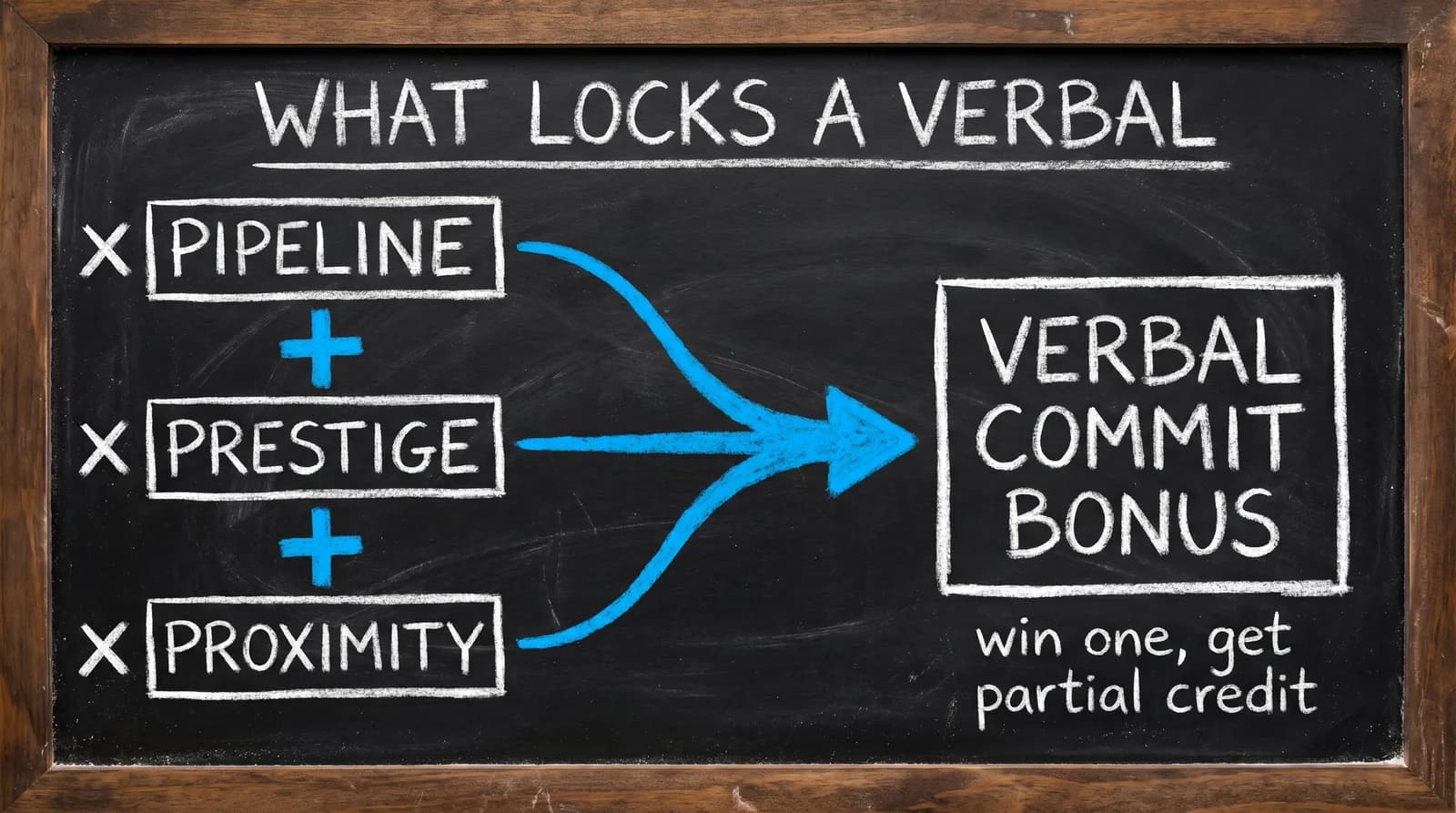
EA confirmed the verbal commit bonus multiplier is built from three separate inputs: pipeline strength, Team Prestige, and Proximity to Home. Because they're now discrete, a school earns partial credit for whichever it wins — not the whole multiplier for winning one.
A school that locks a verbal mostly on geographic closeness, but carries thin pipelines and middling prestige, is more flippable than one that wins all three. The multiplier defending the commit is the product of all three, not proximity alone. So the best pipelines in CFB 27 are the ones you can pair with a geographically close school and strong prestige — Metro Atlanta for Georgia, South Florida for Miami, East Texas for Texas A&M.
Picking your coach pipeline — the decision you can't undo
You get one shot at your coach pipeline at dynasty creation. There's no in-game editor to change it later. Pick a niche regional pipeline, hop schools, and that choice follows your coach forever. This mechanic is carried over from CFB 26 and not contradicted by any CFB 27 source.
How to pick the right coach pipeline
School alignment is the first question. If your school has a Tier 4 or 5 pipeline in an elite region, set your coach pipeline to match it. Stacking is how you get the most out of starting interest.
If you're starting at a program with weak pipelines, your coach pipeline is the only lever for generating starting interest in a top-tier region. A Tier 1 coach pipeline won't fully close the gap against a native Tier 5 powerhouse, but it beats nothing.
The journeyman move: if you plan to hop schools, pick a region that produces talent regardless of where you're coaching. Metro Atlanta, South Florida, and East Texas hold value at any school. A Midwest regional pipeline set from a Big Ten rebuild becomes a dead asset the moment you take an SEC job.
In CFB 27, the proximity split adds one consideration: your coach pipeline region's value is now partly geographic. A coach pipeline in a region dense with talent near many schools (Metro Atlanta) is more portable than one tied to an isolated region. That's a refinement, not a reversal of the CFB 26 logic.
What to lock in before CFB 27 launches
CFB 27 releases July 9, 2026. Four decisions worth making before you start a dynasty — and a note on what we'll verify on launch day.
Pre-launch checklist
- Coach pipeline selection is still permanent at dynasty creation — same decision pressure as CFB 26. Pick a region with portable talent (Metro Atlanta, South Florida, East Texas) unless you're committed to one school.
- Re-evaluate schools geographically close to talent-dense metros; the lat/long proximity change may grade them stronger on Proximity than their pipeline tier implied in CFB 26.
- Treat school pipeline tiers as static unless you plan to invest in the Program Builder path (carry-over from CFB 26 — confirm at launch).
- Remember NIL hits your budget on day one in CFB 27; plan your scholarship spend before you start extending offers.
What we'll verify on July 9
This guide updates on launch day with in-game confirmation. Specifically, we'll verify: whether the pipeline tier structure (0–5 scale) and named regions carried over unchanged from CFB 26; whether per-team tier assignments shifted; whether the visit-cost mechanic (10–40 hours by distance in CFB 26) carries into CFB 27 or is superseded by the lat/long system; and whether the TeamBuilder proximity bug from CFB 26 is resolved.
Until then, every regional claim on this page is expected based on CFB 26 carryover — not confirmed CFB 27 data. With a gaming-native audience, being honest about what's confirmed versus expected is the whole point.
Frequently Asked Questions
What is the best pipeline in CFB 27?
Metro Atlanta is expected to be the top pipeline in CFB 27, accounting for roughly 9% of all 5-star recruits in CFB 26 — about 29 five-stars across a 10-class aggregate, or around 3 per cycle. EA confirmed the pipeline system carries over, but has not published CFB 27 region or tier data, so this ranking uses CFB 26 as the best available proxy. South Florida, East Texas, North Texas, Southwest Texas, and Southern California round out the expected S-tier. We verify on July 9.
Did pipelines change in CFB 27?
One confirmed change: Proximity to Home now uses real latitude and longitude per city, decoupling it from pipeline tiers. The pipeline tier system itself is assumed carried over from CFB 26 — EA has not confirmed it changed. The verbal commit bonus multiplier is now built from three separate inputs (pipeline, prestige, proximity) with partial credit for each. For the full diff, see our CFB 27 Pipeline Changes guide.
Are the CFB 27 pipeline rankings on this page confirmed?
No. EA confirmed pipelines still matter in CFB 27 but has not published CFB 27 region names or tier assignments. The ranking uses CFB 26's launch dataset as the best available proxy, reframed as expected CFB 27 values. Every figure is caveated and updates with in-game data on July 9, 2026.
What's the difference between my school's pipeline and my coach's pipeline in CFB 27?
Two separate systems, carried over from CFB 26. Your school's pipeline tiers are fixed to geographic regions and represent the program's historical reach; they don't change unless you upgrade them through Program Builder. Your coach's pipeline is selected at creation, is permanent, and gives a weekly starting interest boost for recruits from that region. The boost shows no label in the UI. You can't change your coach pipeline after creation.
How does the new Proximity to Home calculation change recruiting in CFB 27?
In CFB 26, proximity and pipeline were effectively linked. In CFB 27 they are independent. If your school is physically close to a recruit's home city, you earn a strong Proximity grade even if your pipeline tier in that region is low. This means mid-majors near talent-dense metros can grade better on Proximity than their tier suggested in CFB 26 — and schools that win both pipeline and proximity are strictly better off.
Does pipeline choice matter for a journeyman coaching career in CFB 27?
Yes, and the proximity split reinforces it. If you plan to hop schools, pick a region that produces talent everywhere you're likely to land. Metro Atlanta, South Florida, and East Texas hold value at any school. The new wrinkle: a coach pipeline region dense with talent near many schools is now more portable, because proximity is graded independently. A regional pipeline tied to one isolated conference area is still a dead asset two jobs down the road.
What is the verbal commit bonus multiplier in CFB 27?
When a recruit verbally commits, EA confirmed the committed school gets a bonus influence multiplier built from three factors: pipeline strength, Team Prestige, and Proximity to Home. Because they're now separate inputs, a school earns partial credit for whichever factors it wins — so a close school with weak pipelines is easier for Top 3 rivals to flip before Hard Commit.
Will this guide be updated when CFB 27 launches?
Yes. This is a pre-launch guide using CFB 26 data as a proxy. On July 9, 2026, we'll verify every regional claim against in-game data — tier structure, named regions, per-team tier assignments, the visit-cost mechanic, and the TeamBuilder proximity bug — and update accordingly. Until then, treat the rankings as expected, not confirmed.