
CFB 27 NIL Dynasty: Land Guys vs. Keep Guys
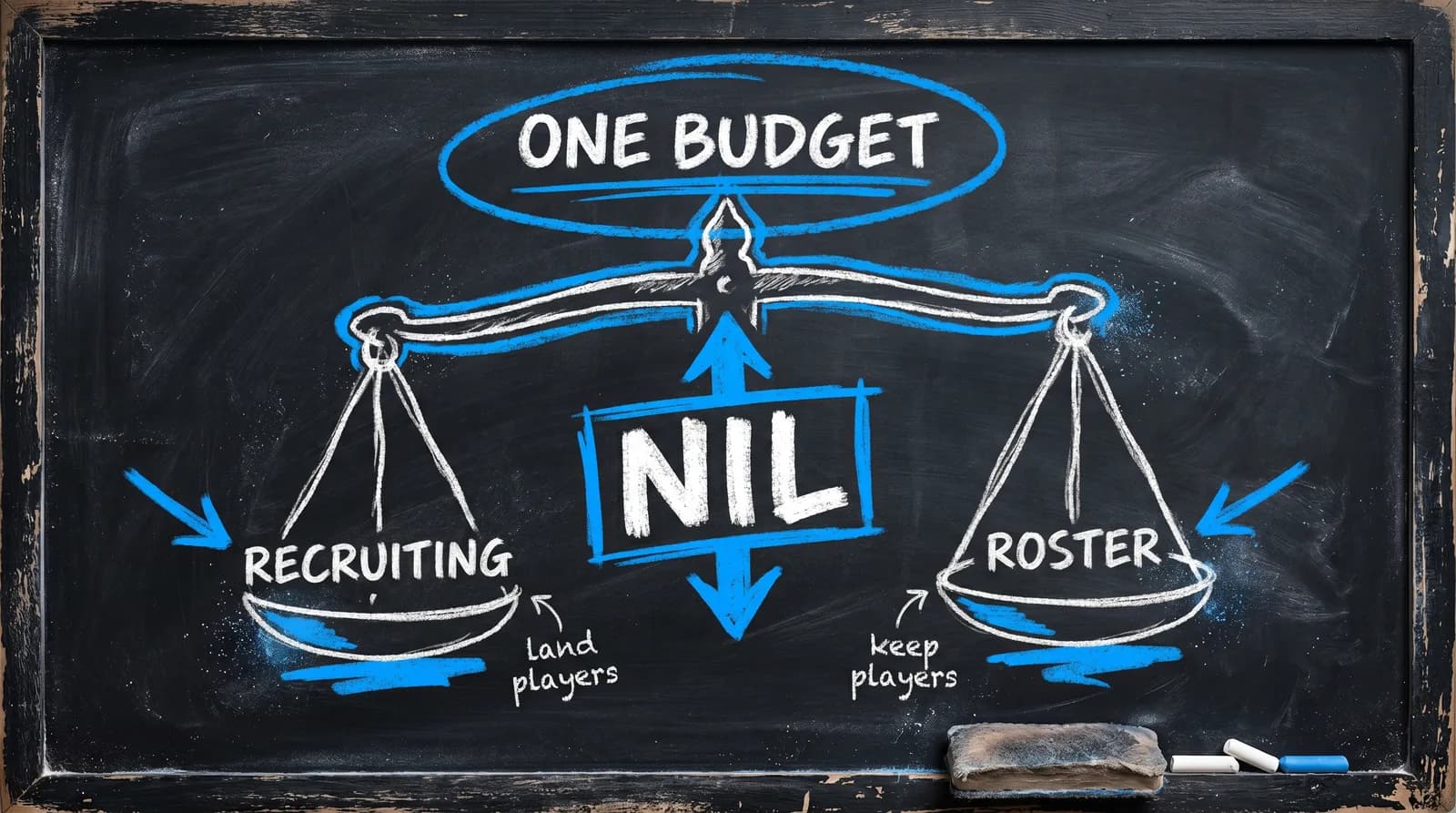
CFB 27 added NIL to dynasty mode for the first time - it was not in CFB 26 or CFB 25. But it is not one thing. NIL splits into two sides that both pull from the same Dynasty Points budget: recruiting NIL to land guys, and roster NIL to keep guys.
That split is the central tension of every dynasty year. Every point you spend to land a five-star in the fall is a point you cannot spend to keep your breakout star in the winter. NIL in CFB 27 is not a new feature so much as a new constraint, and you usually cannot max both sides at once. This guide explains how each side works and how to decide who you pay - and what you give up.
The Short Version
TL;DR
- NIL is new in CFB 27 - it was not in CFB 26 or CFB 25.
- It is two-sided: recruiting NIL (land guys) and roster NIL (keep guys), both from one Dynasty Points budget.
- Spend windows differ: recruiting NIL is mid-season; roster NIL is the End of Season Recap.
- Expected NIL is school-relative: a lower-prestige program pays more for the same player.
- The overpay trap: raising an offer raises that player's floor permanently, and it follows them into their career.
- You usually cannot max both sides at once - the right split depends on your program phase.
One Budget, Two Pools
Your program earns one pool of Dynasty Points per year, and it funds three priorities: coaching staff, facilities, and NIL. Nothing is ring-fenced. A point spent on a five-star recruit is a point not spent on a facility upgrade or a support staffer.
Inside NIL, that same logic splits again. Recruiting NIL and roster NIL draw from the same pool, so you cannot max both unless you coach at a blue blood with an enormous budget. And like every Dynasty Point, NIL money does not roll over - anything unspent at the End of Season Recap is gone. The decision is not whether to spend, but where.
Recruiting NIL: Landing Players
Recruiting NIL is the acquisition side. It is live from Week 0 of the regular season through bowl season - the preseason is scouting only, with no offers allowed.
How Offers Work
Every scholarship offer now carries an NIL component, and the amount is deducted immediately the moment you make the offer - not held in escrow until the recruit commits. If the recruit signs elsewhere or you drop them from your board, the points refund. You can adjust an offer weekly: raising it applies pressure in a tight battle, and if you build a comfortable lead you can dial it back to reclaim points, as long as you stay above any floor you set.
Expected NIL Is School-Relative
Every prospect has an expected NIL amount, and the same player demands different amounts from different programs. High-prestige schools pay less because the brand is part of the compensation; low-prestige schools pay more to make up the difference. EA's own example: a five-star expected 140 Dynasty Points from UCLA but 385 from Ball State - more than double the cost for the identical player. The drivers are star rating, position, the recruit's dealbreaker, and your Team Prestige.
You can offer between 0 and 200% of a prospect's expected amount. Offering above expected boosts your weekly recruiting influence, with the biggest bonus at the 2x cap. Offering exactly at expected is neutral. Offering below expected creates a weekly drag - but it is not automatically wrong. If your school grades, pipelines, or coach abilities are strong enough, you can win below expected and bank the savings.
The Transfer Portal
Transfer portal targets use the same recruiting NIL budget in a compressed window after Early Signing Day, and EA has confirmed transfers lean on NIL even harder than high school recruits. Do not enter the portal window already overcommitted on high school NIL, or you will not have the points to compete.
The Floor-Raising Trap
This is the single most important mechanic to understand before you offer anyone a point. Offering above a player's expected NIL permanently raises their floor. That higher number becomes their baseline expectation in every future negotiation, and dropping below it later triggers a weekly influence penalty during recruiting or higher departure risk at season's end.
EA's example: a prospect expects 100 Dynasty Points and you offer 150. Their expected amount from your school is now 150 forever. Overpaying to land a recruit does not just cost you points this year - it creates a multi-year obligation you cannot undo. Worse, that floor follows the player onto your roster: whatever you overpaid to sign them becomes part of their roster NIL baseline, and it grows as they develop.
Roster NIL: Keeping Players
Roster NIL is the retention side, and it is managed only during the End of Season Recap. You cannot touch it mid-season.
How Retention Works
The Roster NIL screen defaults to showing your at-risk players first, with a Risk of Leaving column that flags both transfer portal risk and NFL Draft risk. Each player starts at their expected amount, and you adjust up to reduce their departure risk or down to raise it. A strong enough commitment can even convince a draft-eligible star to come back for another year. You are setting these allocations before you see who actually leaves - you are managing probabilities, not confirmed outcomes.
A player's expected roster NIL is driven by overall rating, position, class year, awards, dealbreaker, Team Prestige, and what you have previously offered. It is dynamic: players who develop or win awards expect more over time. After the roster NIL stage you get one last persuasion attempt at the Players Leaving screen, but persuasion does not erase NIL math - if you cut someone below their floor, no conversation fixes it.
Recruiting Stages: When You Can Still Flip a Commit
Knowing the commitment ladder tells you when NIL pressure still works and when a recruit is locked in.
The Commitment Ladder
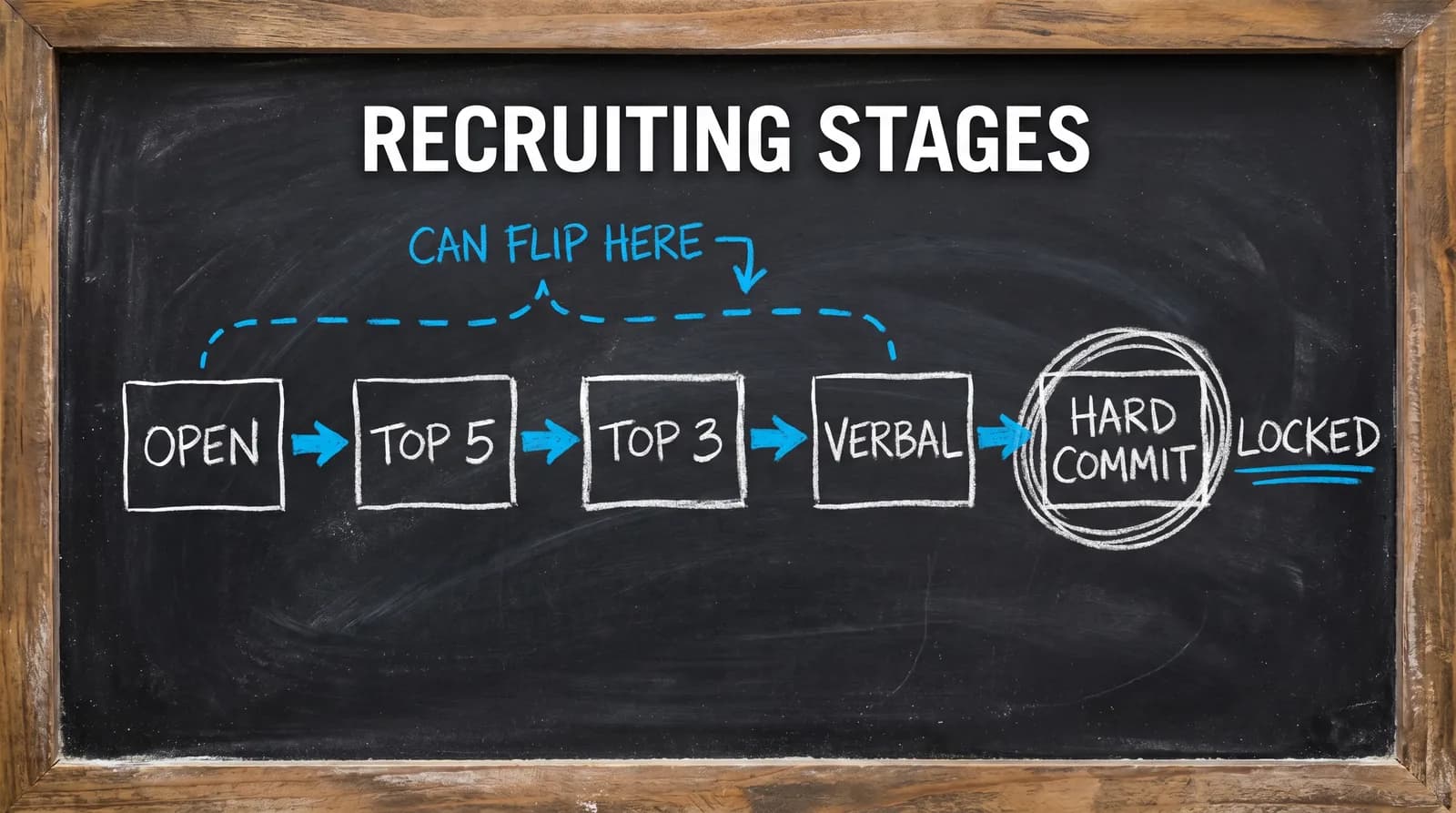
Recruiting now runs Open, Top 5, Top 3, Verbal, then Hard Commit - the old Top 8 stage is gone. You can flip a recruit any time before Hard Commit, but a verbal commit gets a multiplier that makes them harder to pull away. That cuts both ways: get your target to verbal early and rivals have to overpay to flip them, but a recruit who only verbals to you is still in play for everyone else until they hard commit.
Land Guys vs. Keep Guys: The Core Decision
There is no universal NIL split. The right call depends on what phase your program is in - and on the timing trap of committing recruiting money before you know your retention bill.
Tilt by Program Phase
| Program Phase | Tilt Toward | Why |
|---|---|---|
| Rebuild (low prestige, thin roster) | Recruiting NIL | You have no stars worth protecting yet - bring talent in first. Lower prestige also makes each recruit cost more, so efficiency matters. |
| Ascending (growing prestige, early talent) | Split | You are developing players worth keeping. Over-tilting to recruiting now costs you the guys you just landed. |
| Contender (established prestige, star-heavy roster) | Roster NIL | Your roster is your most valuable asset. Losing a Heisman candidate to the portal is a multi-year setback, and your brand can sell a smaller recruiting class. |
The scale of the decision is brutal at the top of the talent market. In one early-access save, offering a single five-star QB 360 Dynasty Points consumed roughly a quarter of the program's entire annual budget - while total roster NIL that same year was around 200 points. One elite recruit cost more than retaining the whole returning roster. (Pre-launch footage, illustrative.)
Budget-Stretching Moves
- Hire a Contract Specialist support staffer. EA confirms a staff type that lowers player NIL expectations across the roster - a direct multiplier on your retention budget. Hire it in the preseason before you set roster NIL.
- Target low-NIL-demand three-stars. Some lower-ranked three-stars ask for very little, which is a budget-efficient rebuild path while your grades do the selling.
- Use the Top Classes screen to see what rival schools are spending on shared targets, so you do not overpay to beat a school that was never really in it.
- Check the Team Stats NIL-by-position breakdown to catch positional overpayment across your roster.
- Win below expected when your non-NIL stack (grades, pipelines, coach abilities) is strong enough to absorb the weekly drag.
Track Both Sides With Dynasty Central
Two-sided NIL is a budgeting problem that spans the whole season: offers you make in the fall set obligations you pay in the winter, and overpaying once raises floors for years. Holding all of that in your head - or a notes app - is exactly the friction Dynasty Central removes.
Dynasty Central tracks your NIL spending across both sides, surfaces your retention risks heading into the End of Season Recap, and shows how your floors are trending season over season so you can see whether your spending is building a roster or just inflating your costs. Start free and plan your NIL before the offers go out.
Frequently Asked Questions
How does NIL work in CFB 27 dynasty?
NIL is split into two sides that share one Dynasty Points budget. Recruiting NIL helps you land high schoolers and transfers, with offers deducted immediately and refunded if the recruit goes elsewhere. Roster NIL, set at the End of Season Recap, lowers your current players' risk of leaving. Both compete for the same pool.
What is the difference between recruiting NIL and roster NIL in CFB 27?
Recruiting NIL lands new players and is spent during the regular season. Roster NIL keeps your existing players and is managed only at the End of Season Recap. Because they draw from the same budget, spending heavily to recruit in the fall leaves less to retain your stars in the winter.
What is the NIL overpay trap in CFB 27?
If you offer a player above their expected NIL, that higher amount becomes their permanent floor at your school. Drop below it later and you take a weekly recruiting penalty or higher departure risk. Offer 150 when they expected 100 and they now expect 150 - and even more after a breakout season. Overpays compound into multi-year retention debt, and the floor follows recruits onto your roster.
Do recruiting NIL points carry over in CFB 27?
No. Dynasty Points, which fund NIL and everything else, do not roll over year to year. Anything unspent expires at the End of Season Recap. Unused recruiting NIL budget does not save - it disappears, so spend it deliberately within the season.
How do I keep my star players from leaving in CFB 27?
Manage their roster NIL at the End of Season Recap. Check the risk-of-leaving indicator for each player and raise NIL on the ones who matter to reduce their departure risk. Prioritize high-risk players who are actually important - a breakout star with a high NIL floor is your number-one concern, and a strong enough offer can even pull a draft-eligible player back for another year.
Can you flip a recruit in CFB 27?
Yes. You can flip a recruit's commitment any time before they Hard Commit. Verbal commits get a multiplier that makes them harder to flip, and the old Top 8 stage was removed. The stages are now Open, Top 5, Top 3, Verbal, and Hard Commit.
How much NIL do recruits cost in CFB 27?
It depends on the school. Expected NIL is school-relative - a five-star reportedly cost 140 Dynasty Points at UCLA but 385 at Ball State for the same player. Cost is driven by star rating, position, dealbreaker, and your Team Prestige. You can offer between 0 and 200% of the expected amount.
Should I spend NIL on recruiting or keeping players in CFB 27?
It depends on your program phase. Rebuilds should tilt toward recruiting NIL because they have no stars worth protecting yet. Contenders should tilt toward roster NIL to keep their best players. Ascending programs split the budget. There is no fixed ratio - it depends on who is at risk and how strong your recruiting is without NIL.
Is NIL pay-to-win in CFB 27?
No. Both NIL sides and the Dynasty Points budget are free for everyone. The Rainmaker coach archetype, which boosts NIL influence and retention, is an EA MVP+ perk, but the core NIL system is available to all editions and commissioners can disable the MVP+ advantages in online dynasties.